Matcha · 5 min read
Matcha Whisk vs Electric Frother: Which Tool Fits Your Drink?
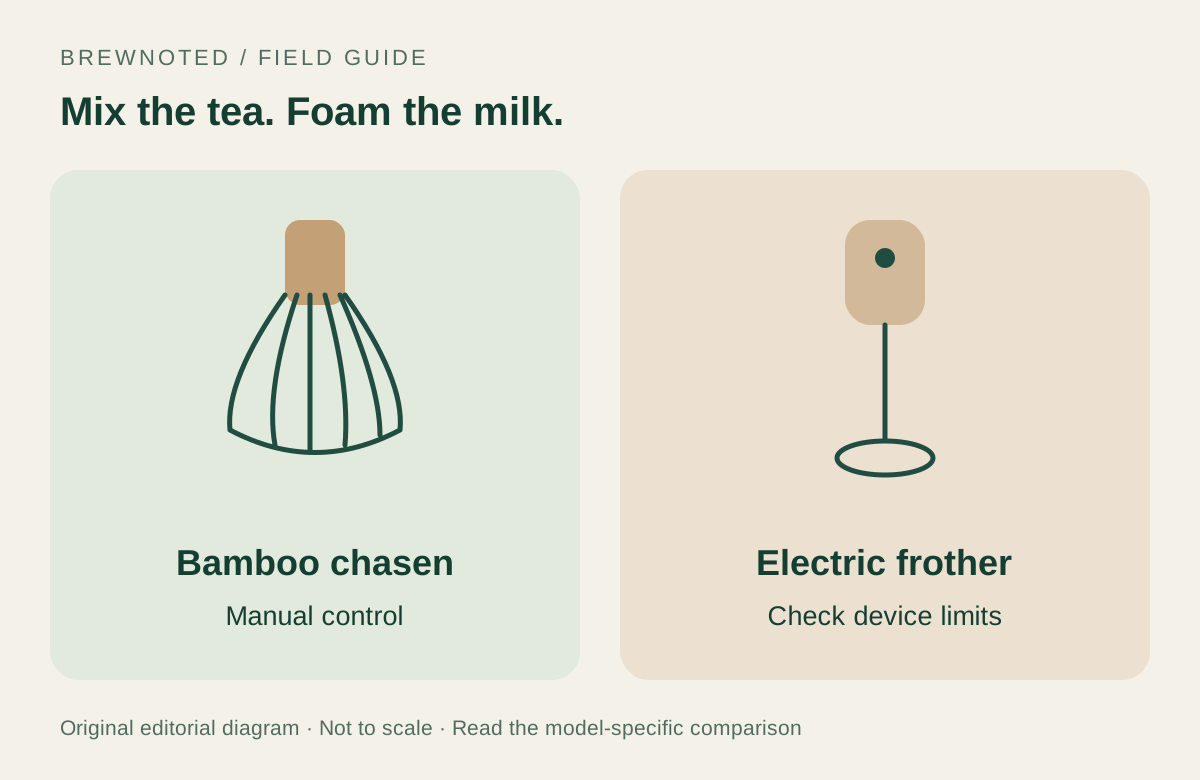
Compare a bamboo chasen with a handheld frother by the drink you make, mixing space, cleanup and whether you want tea foam or milk foam.
 BrewNoted
Find matcha troubleshooting, iced latte recipes and cold-brew tea guides. Search by problem, save useful articles and choose your next brewing tool.
Search all guides ↓Identify when the problem appears: dry lumps before milk, a weak first sip or dilution after the ice melts. These observations lead to different next steps.
Measure powder, water and milk separately. Keep the milk product and sweetener fixed while comparing one quantity, then save the version you enjoy.
Choose cold brewing or tea poured over ice before scaling a batch. Follow the tea producer’s instructions and account for serving dilution.
Search a model, brewing method or problem. Save useful guides to a shortlist on this browser; no account needed.
Build a useful reading list and send it to a friend. Only guide links are shared, never your reading history.
28 guides
Compare a bamboo chasen with a handheld frother by the drink you make, mixing space, cleanup and whether you want tea foam or milk foam.
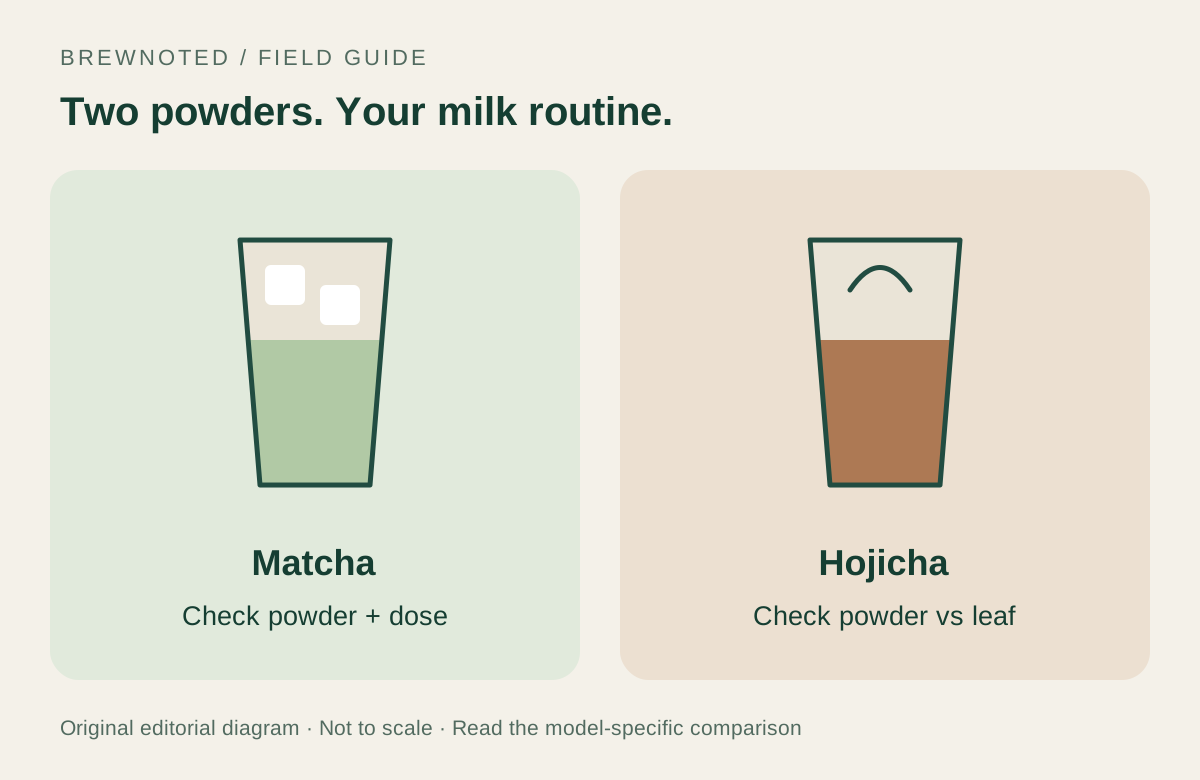
Compare green matcha and roasted hojicha drinks without confusing powder with loose leaves or using café menu names as ingredient labels.
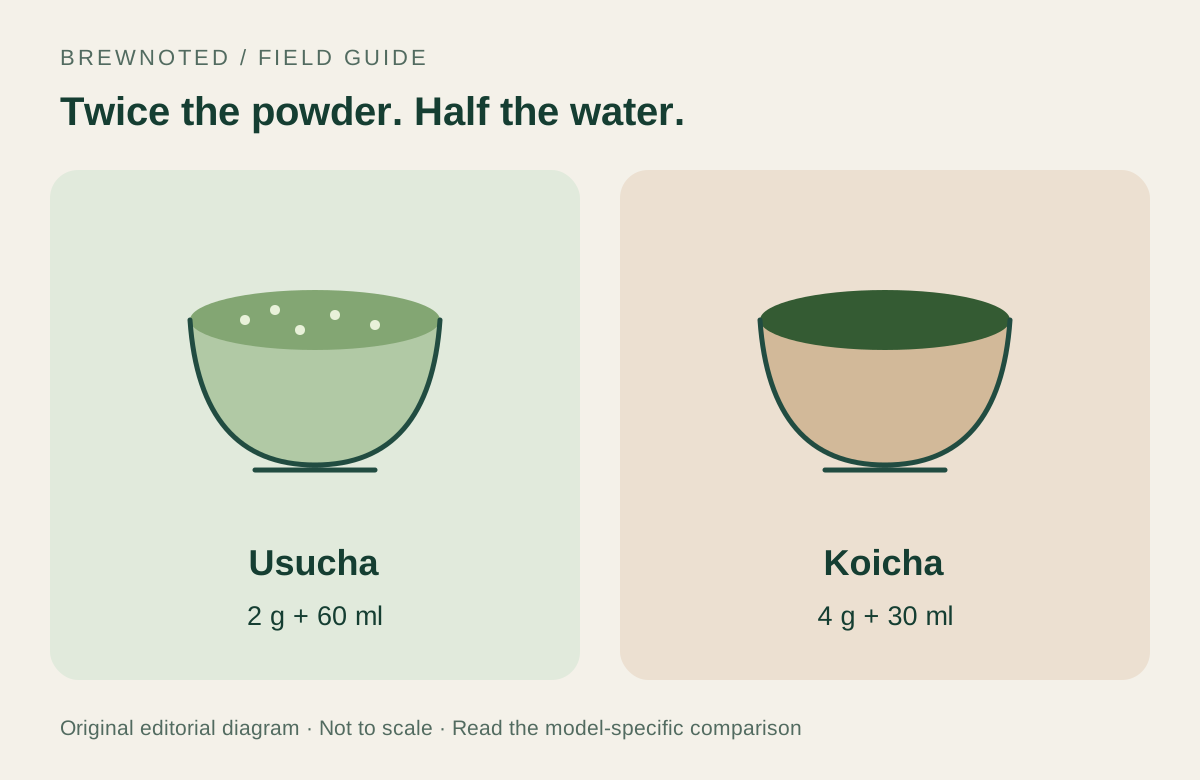
Understand thin and thick matcha with attributed preparation quantities, a fourfold powder-to-water comparison and a practical first-bowl plan.
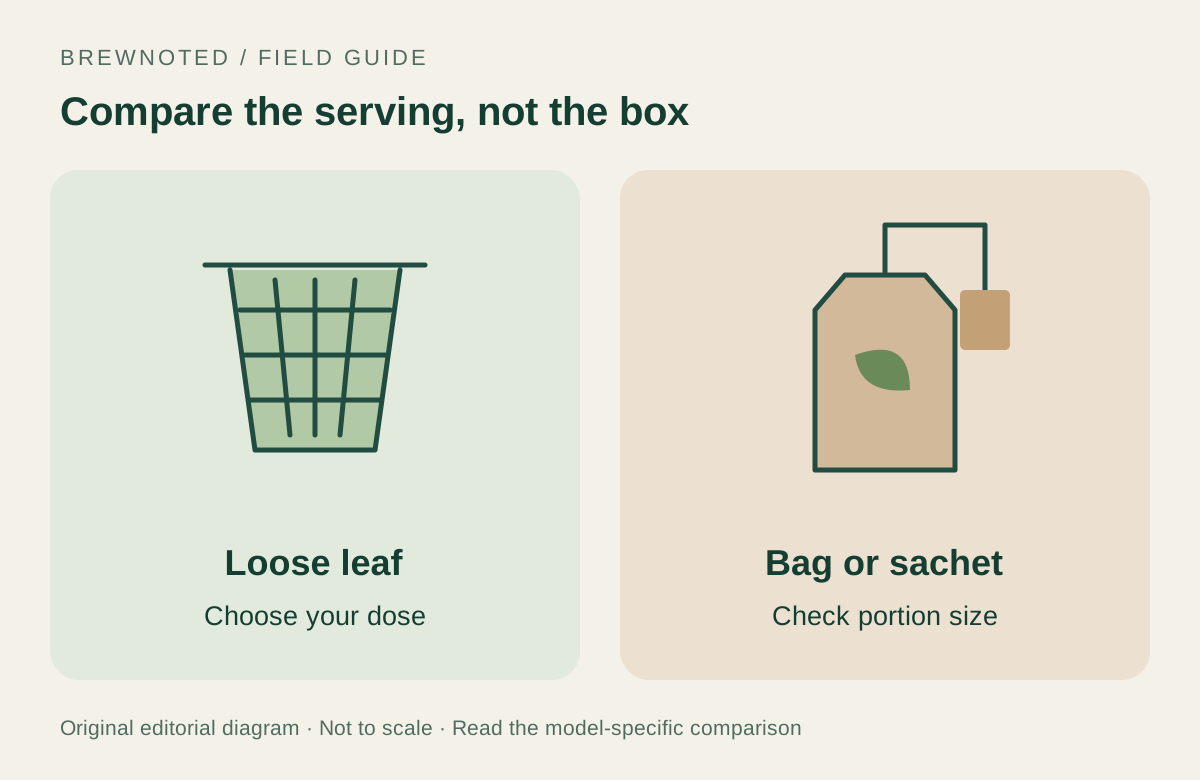
Compare tea formats using the actual leaf, grams per serving and cleanup. Bag shape alone does not establish quality or value.
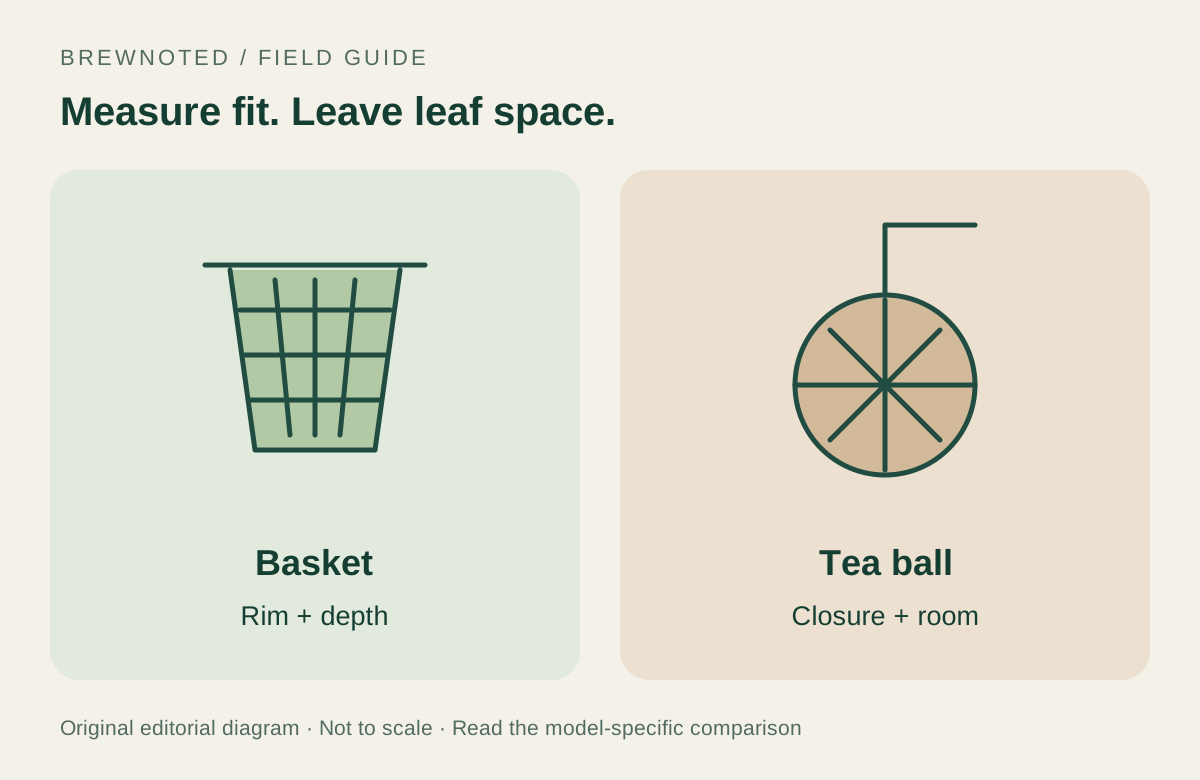
Choose an infuser by its dimensions, mesh and removal method. A roomy basket and a compact tea ball solve different space and handling problems.
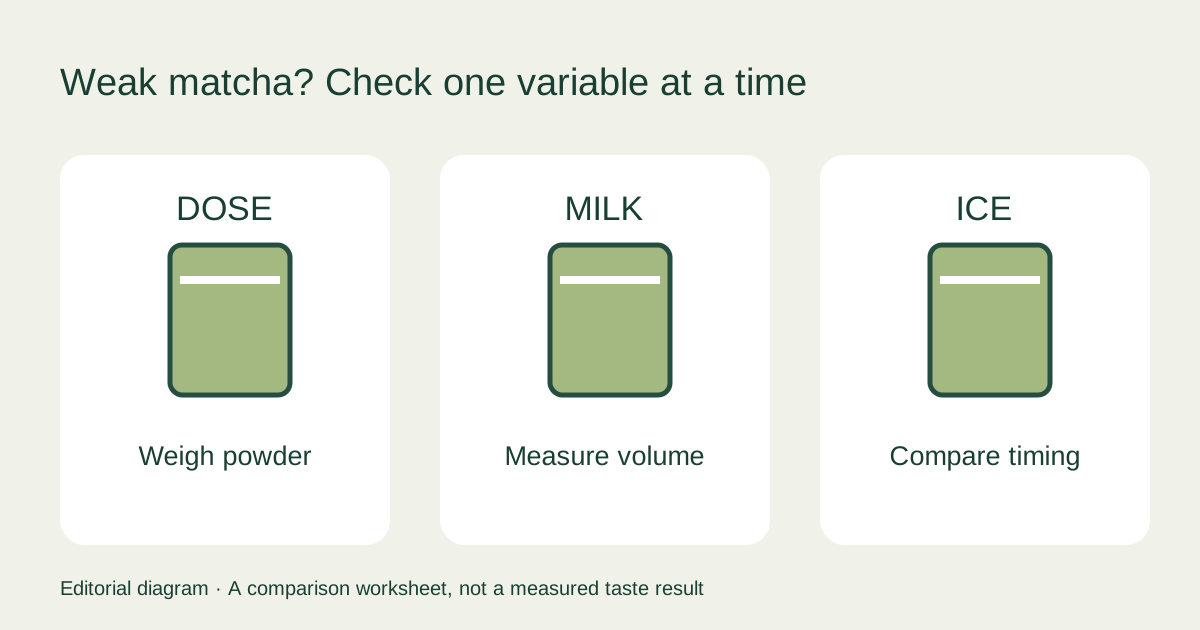
Troubleshoot a watery or overly milky matcha latte with a measured comparison. Separate powder dose, milk volume and melting ice before buying another tin.
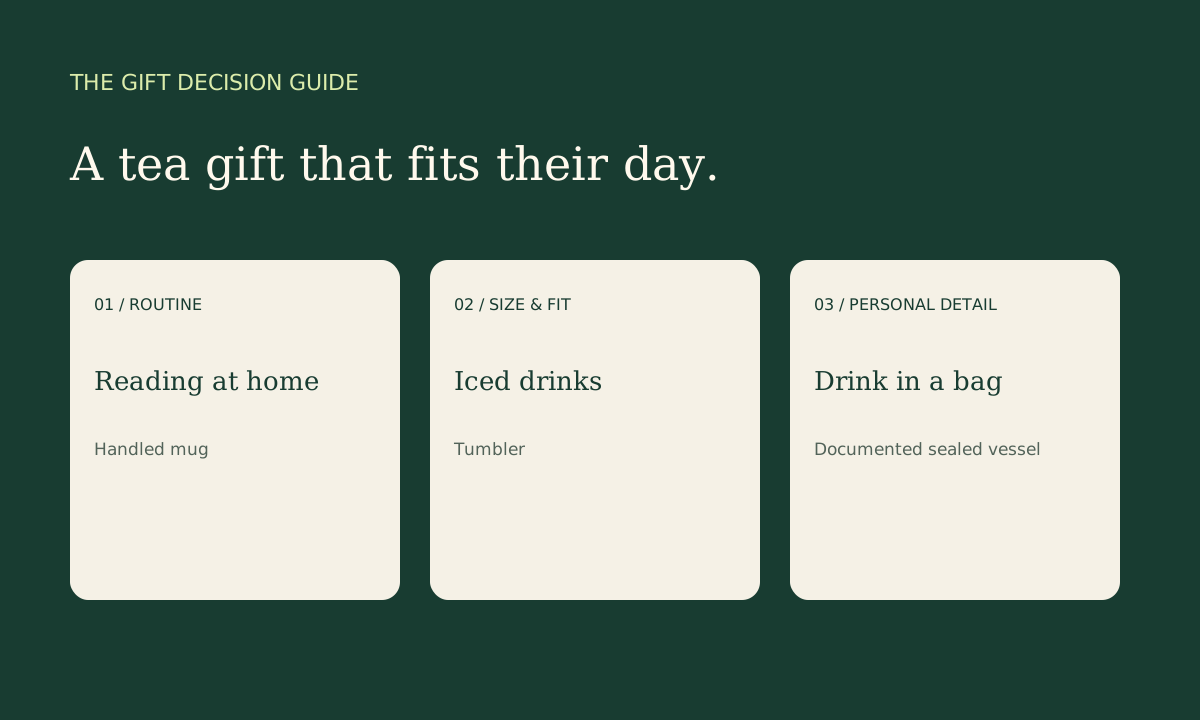
Match a tea gift to reading breaks, iced drinks or shared rituals, with a practical size and personalization checklist.

Refresh an outdoor tea corner with a fit-first checklist: when to change the fabric shell, when the insert needs attention, and how to avoid buying the wrong size.
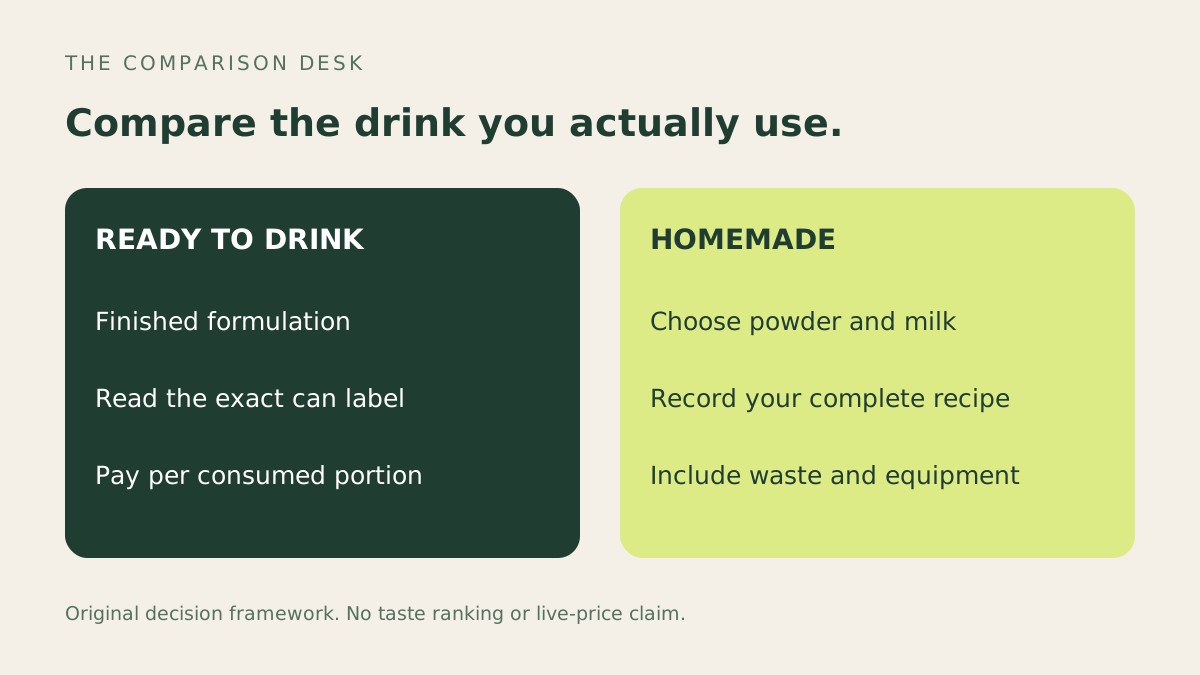
Use La Colombe’s ready-to-drink format and a documented Ippodo recipe to compare serving size, ingredient control, preparation and realistic cost per drink.
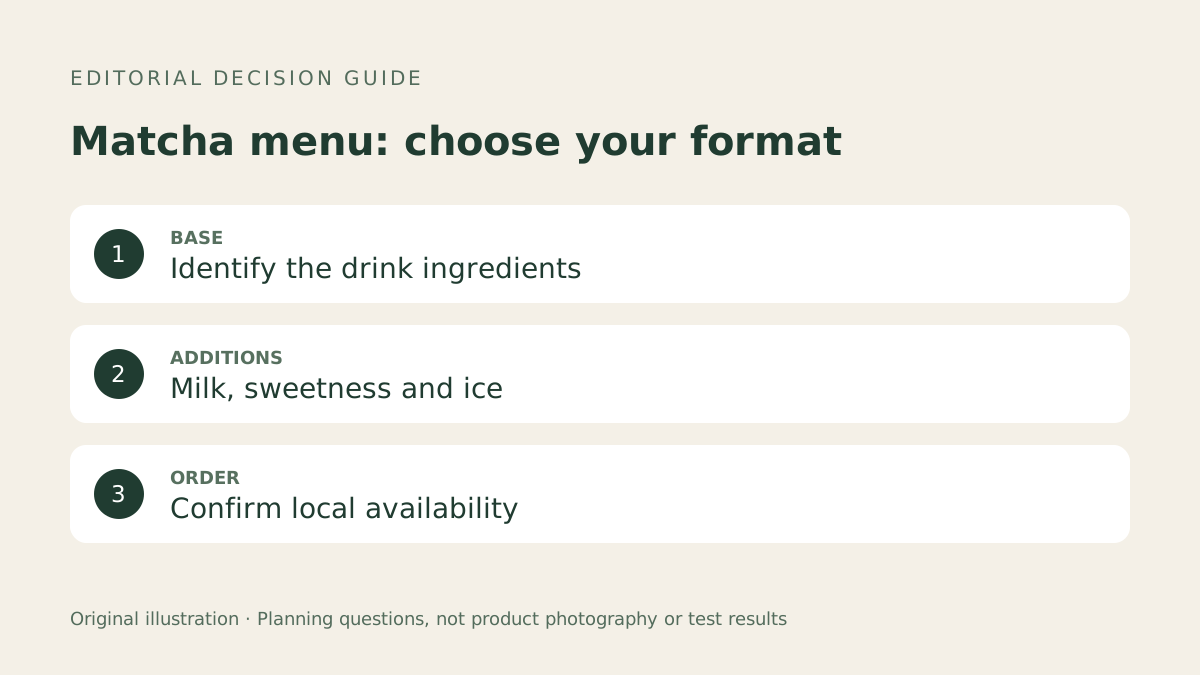
Compare the announced mango, strawberry with salted cream cap, and oat matcha drinks. Check branch availability, order details and your own cost per visit.
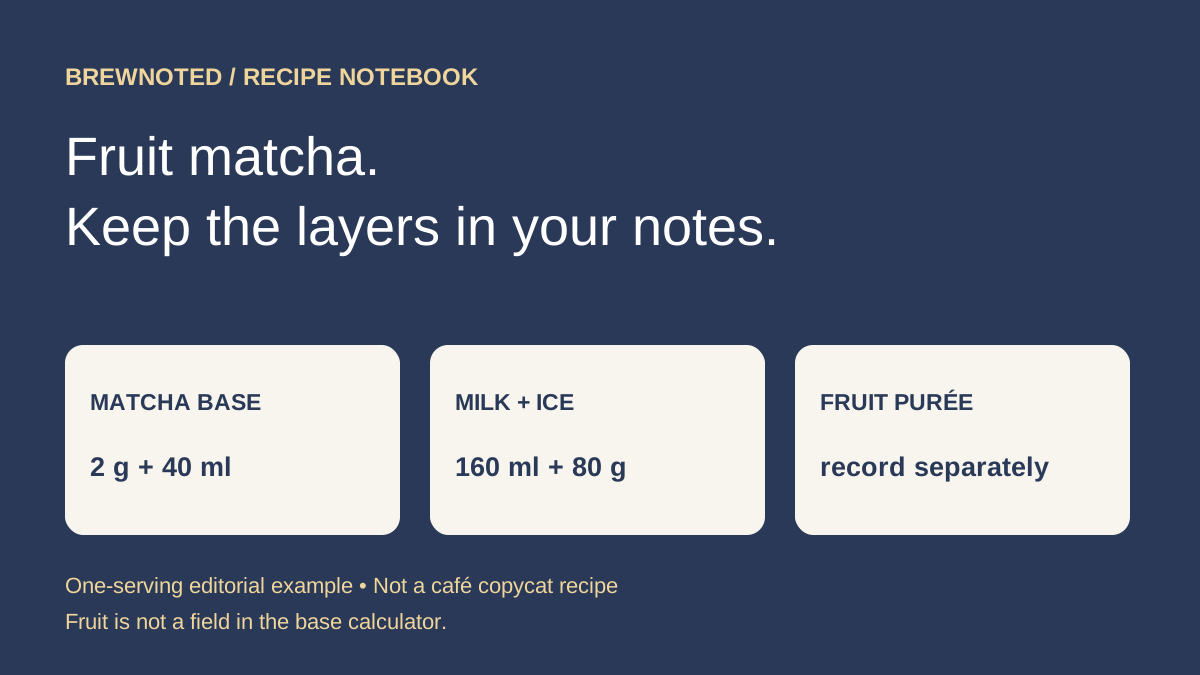
Keep fruit separate from the tea base, scale a small recipe and record what you change. An editorial planning example, not a café copycat formula.
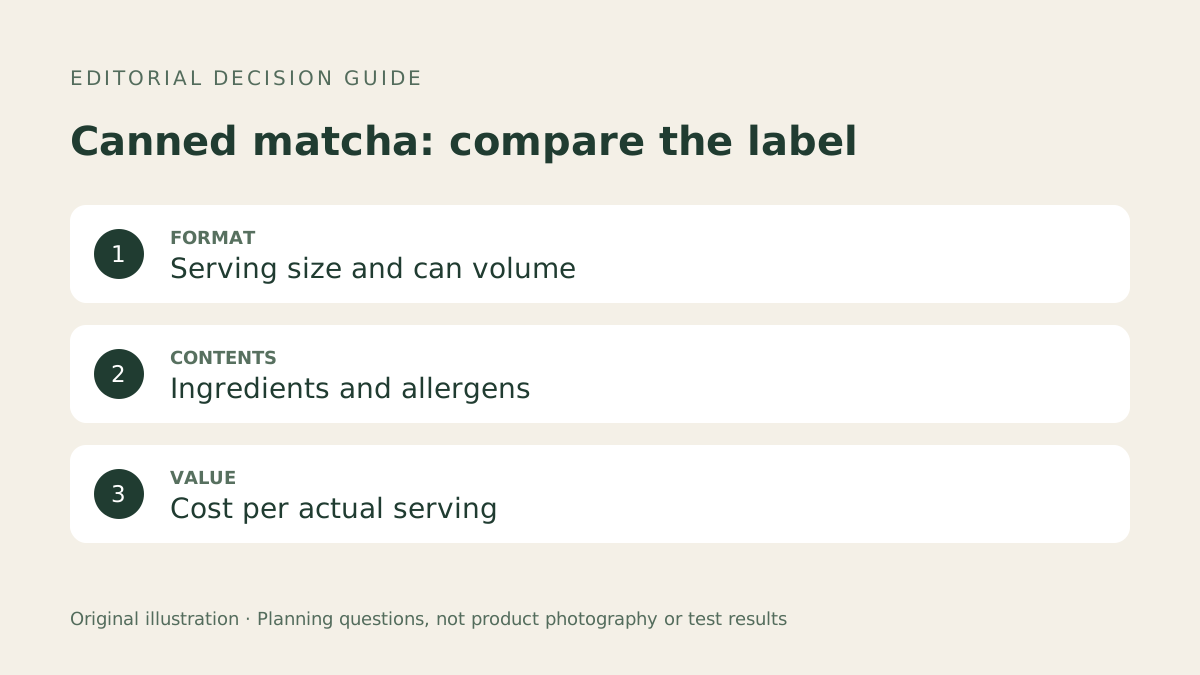
Everyday, Strawberry or Vanilla? Compare the announced 11 oz cans, 65 mg caffeine and lactose-free whole-milk base, then calculate can versus homemade cost.
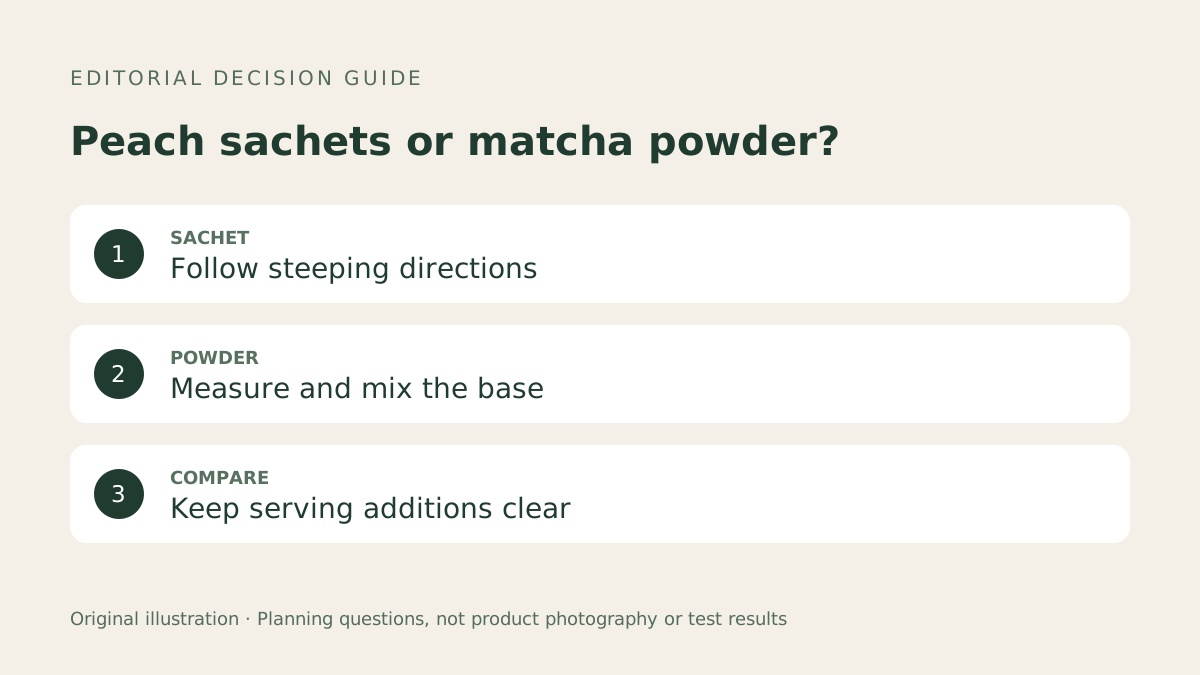
Compare preparation, dose control, equipment and cost per serving without treating a flavored tea blend as pure matcha powder.

A September 17 announcement has two future effective dates. Here is how to avoid confusing sticker price with the amount of tea you receive.

A September FAQ update helps explain why a year-round tea is not labeled like a seasonal harvest release.

Check dry powder, the mixing stage and your recipe separately before buying another whisk or changing matcha brands.

Use a published usucha method, then learn what to record before changing the recipe.
Read the tea’s instructions, measure one brew and compare a small temperature adjustment.

Choose tea with clear cold-brewing instructions and keep a record of the batch, not just the steeping time.

Keep a stable favorite, track one change at a time and back up the exact recipe. Includes an empty CSV log and a worked version history.

Start with Ippodo’s measured recipe, then compare milk quantity without changing everything at once.

Use servings arithmetic and the supplier’s storage advice before choosing a larger bag.
Both produce a cold drink, but their starting recipes and timing should stay separate.
A simple dilution worksheet helps separate the tea recipe from the way it is served.
Choose a small amount of tea with clear preparation instructions before buying a collection of accessories.
Pouring and draining take time too. A consistent timing convention makes a recipe easier to repeat.
Keep the tea base constant and separate flavor preference from claims about nutrition or performance.
Use proportional arithmetic for the ingredients, then check the vessel and method before multiplying a batch.