BrewNotedOur approach
 Canned matcha latte vs homemade: cost, control and convenience
Use La Colombe’s ready-to-drink format and a documented Ippodo recipe to compare serving size, ingredient control, preparation and realistic cost per drink.
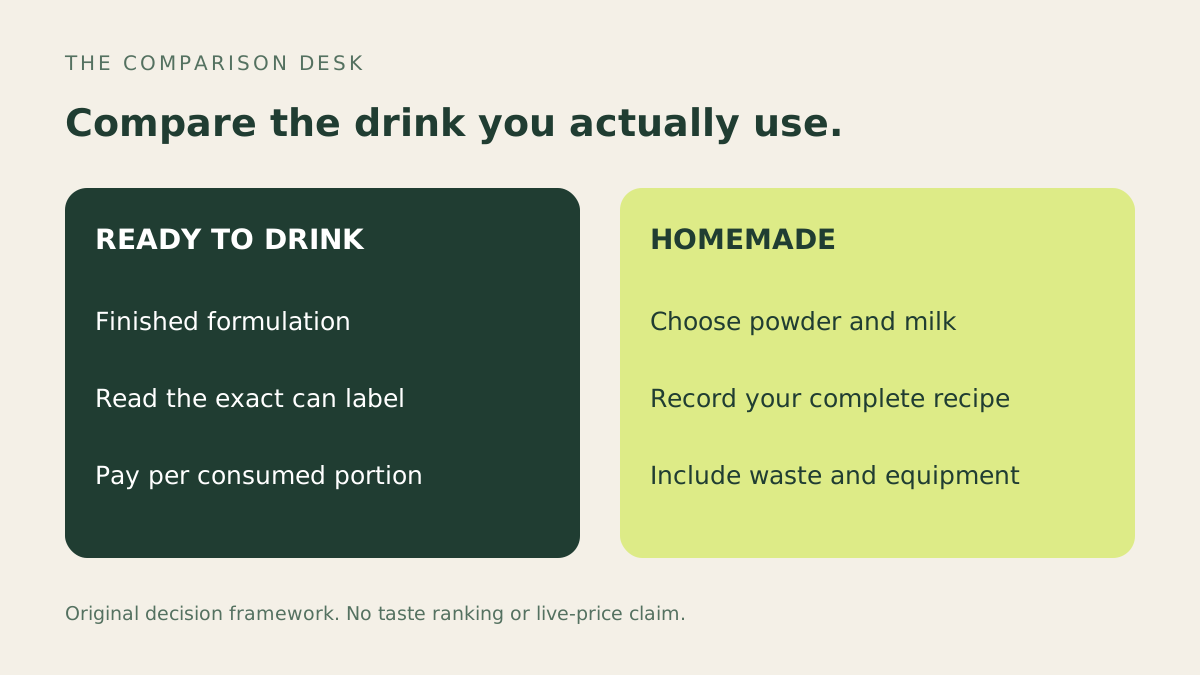
Research-based comparison, sources checked October 2, 2026. Manufacturer statements are attributed; scenario calculations and buying judgments are our analysis. We have not performed a hands-on or taste test. Hypothetical prices are not live offers. Original illustration; no affiliate links.
| Question | Canned latte | Homemade latte |
|---|---|---|
| Preparation | Finished formulation | Measure, mix and clean |
| Powder dose | Use verified product disclosure; do not guess | Weigh your chosen powder |
| Milk / sweetness | Set by selected variant | Choose and record separately |
| Cost comparison | Paid price per consumed portion | Ingredients plus waste and equipment |
| Storage | Follow exact can label | Follow each ingredient’s instructions |
| Repeatability | Same selected product and serving | Requires complete recipe record |
| Taste / nutrition winner | Not established | Not established |
Decide what convenience is worth in your routine
A canned latte fits a moment when you want a finished drink without measuring or washing mixing tools. A homemade latte fits a routine where choosing the powder, milk and quantity is part of the appeal. Neither format is automatically better value. Compare the portion you actually drink, the ingredients you want to control, and how often an opened ingredient goes unused. This is a format comparison with named examples, not a blind taste ranking.
The two reference points
La Colombe’s September 17 announcement describes ready-to-drink matcha lattes in Everyday, Strawberry and Vanilla variants, made with lactose-free whole milk. That is still dairy; confirm the exact package ingredient and allergen information for your needs. For the homemade reference, Ippodo’s iced latte recipe specifies 3 g matcha, 100 ml water at 80°C and 100 ml cold milk, served with ice. We have not prepared it or tested the canned drink. The recipes are not claimed to be equivalent in composition, volume or flavor.
Compare finished portions before comparing price
A recipe containing 200 ml of added liquid plus powder and ice is not automatically a measured 200 ml final drink. A can’s labeled volume and an ice-filled glass therefore need different treatment. For price per volume, measure the liquid you actually consume and document whether ice melt is included. For price per occasion, compare one can with the homemade serving you would genuinely choose. Do not enlarge one drink on paper just to make its unit cost look smaller. Record the can size from your selected package; this article does not infer it from the brand name.
Worked ingredient-cost example
These are invented prices: a 30 g tin costs $18 and milk costs $3 per 1,000 ml. At a 3 g powder dose, powder costs $1.80. A 100 ml milk portion costs $0.30, bringing those ingredients to $2.10 per preparation before water, ice, sweetener, equipment, energy or waste. If a can costs an assumed $3.50, the difference is $1.40 per occasion, provided the compared servings suit you equally. That is not a current La Colombe price or a claim that homemade always saves money. Replace every price and quantity with your receipt and recipe.
Find the powder-price break-even point
In the same simplified example, a $3.50 can minus $0.30 of milk leaves $3.20 available for a 3 g powder dose. Divide by three to obtain about $1.067 per gram, or $32 for a 30 g tin. Above that powder price, the homemade ingredient subtotal exceeds the assumed can price; below it, the subtotal is lower. Other costs lower the threshold. For a separate equipment example, $30 spent solely to make these drinks divided by a $1.40 saving requires 22 preparations to recover the purchase cost, rounding up. That calculation fails if you waste ingredients or do not actually replace a purchased drink.
Ingredient control is different from a nutrition verdict
At home you can record the powder dose and select milk and sweetener separately. A finished canned formulation is fixed, although the range may offer different variants. Neither fact establishes which contains less sugar or caffeine. Use the nutrition panel and serving size on the exact can, and the quantities and labels of your own ingredients. The announcement does not provide a powder-equivalent dose that we can use for a caffeine comparison. A darker green color or a stronger perceived taste is not a substitute for that information.
Count preparation, cleaning and waste honestly
For the homemade option, count measuring, mixing, serving and cleaning rather than timing only the whisking step. For the canned option, count any chilling or serving steps required by its label. Follow each product’s storage instructions before and after opening; this article does not establish a shared shelf life. If your hypothetical 30 g tin supplies only eight enjoyable 3 g preparations before you discard the remainder, its effective powder cost is $18 divided by eight, or $2.25 per drink, not $1.80. Frequency of use can change the value decision more than a small shelf-price difference.
A fair preference comparison
Choose whether you want to compare equal liquid quantities or your normal full serving; write down that choice. Use similar cups and comfortable serving temperatures, record any ice, and label the exact canned variant and homemade recipe. Describe sweetness, tea presence, body and aftertaste separately. A preference for the finished homemade recipe does not isolate powder quality, because milk and other ingredients also differ. Save the complete homemade version in the matcha calculator so a later trial changes only one deliberate input.
Who should choose which?
Choose the ready-to-drink format when avoiding preparation is the main benefit and the label fits your needs. Investigate homemade when regular use, ingredient flexibility and recipe tracking justify the work. If you make a latte only occasionally, start with a realistic small-quantity cost calculation rather than buying a large tin to chase a theoretical saving. Our linked launch guide covers the brand announcement; this page answers the separate decision of whether a finished drink or home routine fits you better.
How we research these guides · Find your next step