 BrewNoted
Matcha vs Hojicha Latte: Powder, Flavor Direction & Cost
Compare green matcha and roasted hojicha drinks without confusing powder with loose leaves or using café menu names as ingredient labels.
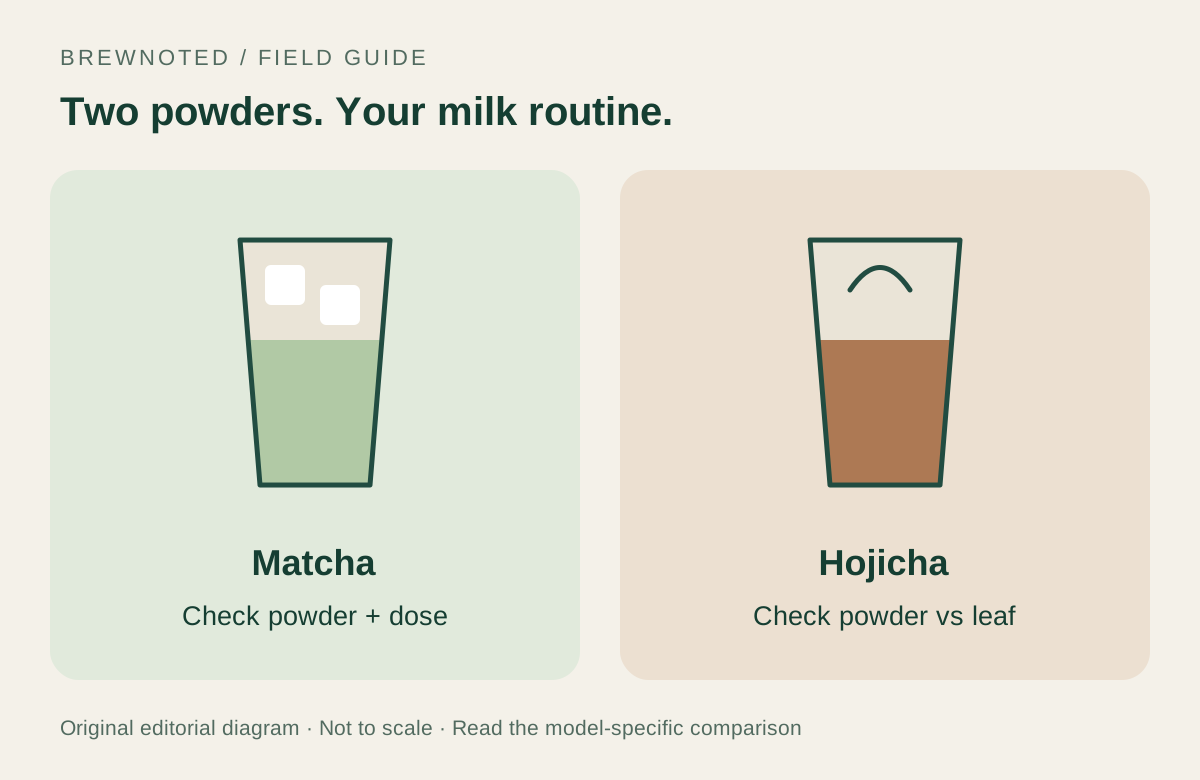
Sources checked October 21, 2026. This is a research-based comparison, not a hands-on test or taste ranking. Manufacturer facts are attributed; worked examples and decision worksheets are our editorial analysis. Illustrations are schematic, not photographs.
| Decision | Matcha latte | Hojicha latte |
|---|---|---|
| Product to identify | Matcha powder or a labeled mix | Roasted tea powder, leaf infusion or a mix |
| Flavor direction | Assess the specific matcha with your milk | Assess the roasted tea with your milk |
| Preparation | Whisk a measured tea base | Follow the powder or leaf method purchased |
| Sweetness | Check powder mix and milk labels | Check powder mix and milk labels |
| Cost | Price per gram × chosen powder dose | Price per gram × chosen powder dose |
| Caffeine comparison | Needs product-specific information | Not established from brown color |
Read the ingredient format before the flavor name
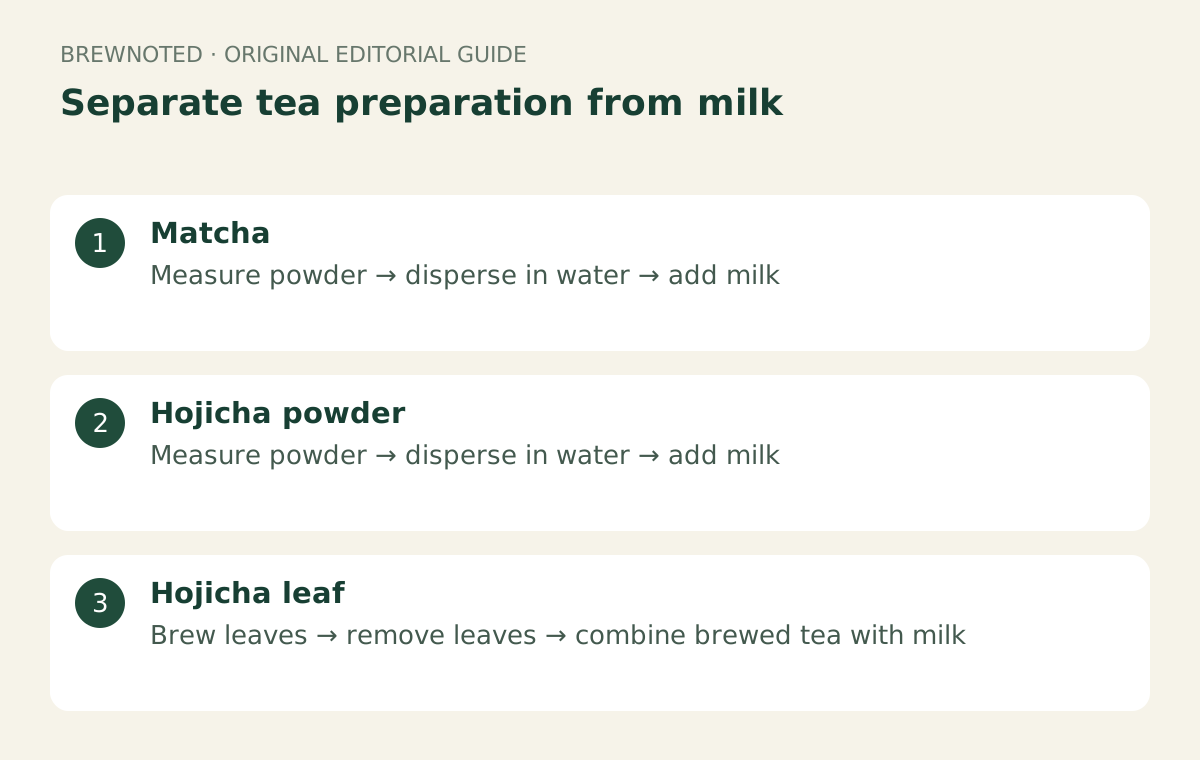
Hojicha Co. explains that hojicha powder is sometimes described as roasted matcha because both are Japanese tea powders. That shorthand can hide an important shopping distinction. Loose hojicha leaves for an infusion are not the same product as finely ground powder for a milk drink. Nor is a sweetened instant latte mix the same as pure tea powder. Check ingredients and preparation instructions before copying a recipe written for a different format.
Treat flavor descriptions as a starting question
Matcha and roasted hojicha point you toward different tea experiences, but a menu name is not a tasting result. Powder selection, dose, milk and added syrup all influence the drink you receive. If comparing at a café, ask what is actually in each drink and whether sweetness can be adjusted. Record your own observations rather than assuming that every hojicha latte is less sweet or every matcha latte is more bitter.
Use a small, controlled home comparison
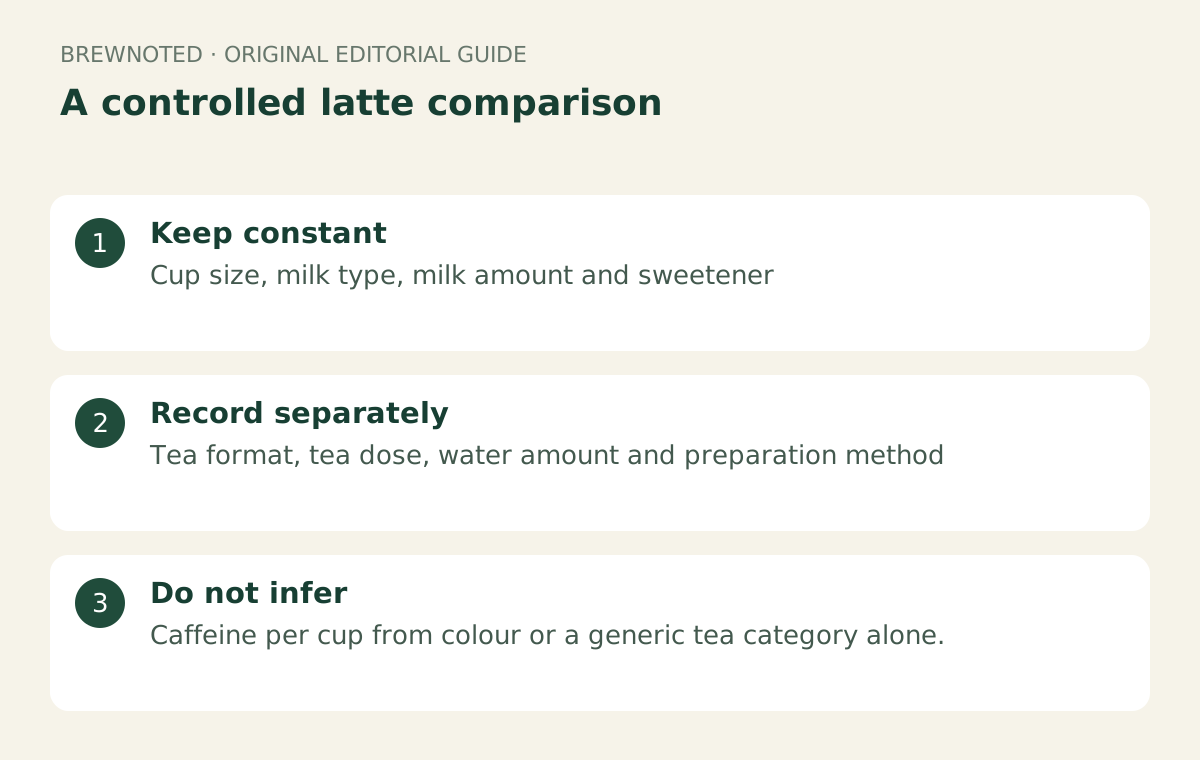
Choose the same milk and similar final serving volume for an exploratory trial. Start with each producer’s recipe rather than assuming both powders require an identical dose. Record the grams used, water, milk and sweetener. If you later compare equal powder doses, label that as a second experiment. Equal grams answers a different question from comparing the recipe each producer recommends for its own product.
Do the arithmetic at the serving level
In an invented example, a 30 g tin costing $18 is $0.60 per gram. A 3 g portion costs $1.80 before milk. A hypothetical 100 g pouch costing $20 is $0.20 per gram, but a 4 g portion costs $0.80, not the $0.60 you would get by incorrectly copying the first dose. These are not market prices or taste rankings. Add delivery and the ingredients you actually consume to compare your own options.
Do not infer caffeine from the appearance
A green drink and a brown drink are not laboratory measurements. The tea, amount used and preparation all matter, and a café cup may contain more than one tea ingredient. If caffeine is a purchasing constraint, seek product-specific information rather than using an unsourced number for every latte. This comparison does not assign a caffeine-free label to hojicha or estimate a precise caffeine amount from powder color.
Separate layering from the drink you taste
A layered photograph may show tea, milk and ice before they are mixed. For a fair flavor comparison, decide whether you are tasting the mixed drink or separate layers and use the same approach for both. Measure ice and note elapsed time. A visually darker layer is not proof of a stronger finished beverage. The worksheet is simple: product, dose, milk, sweetener, ice, time and one sentence about what you would change.
Can I substitute hojicha powder gram for gram?
You can design an equal-mass comparison, but it is not automatically a recipe substitution with the same taste or texture. Use each product’s directions first, then make a smaller controlled comparison if you want to explore dose. Loose roasted leaves are not a gram-for-gram substitute for powder because the preparation differs. A sweetened premix also changes the sugar and tea content, so its scoop weight cannot be treated as pure tea weight.
Which should you try first?
If your current matcha drink is balanced and you want a different tea direction, a small amount of hojicha powder offers a focused comparison. If your matcha is merely weak or clumpy, diagnose that recipe before assuming a new tea will fix it. Start with a quantity you can use comfortably, especially if comparing several powders. The most useful outcome is a recipe you would repeat, not a winner declared from package artwork.
Compare the format you are actually buying
Roasted tea leaves and roasted tea powder are not interchangeable ingredients. A leaf-based recipe requires extraction and straining, while powder remains in the drink. Read the ingredient list too: a sweetened latte blend is not directly comparable to unsweetened tea powder at the same scoop size. For a useful home comparison, weigh the tea and milk, keep sweetener constant and note the finished serving size. Taste the tea mixture before adding milk to identify whether a weak latte began with a weak base or excessive dilution. Avoid making a caffeine estimate without reliable information for the exact product and serving.
How we research these guides · Find your next step

