BrewNoted
Matcha Whisk vs Electric Frother: Which Tool Fits Your Drink?
Compare a bamboo chasen with a handheld frother by the drink you make, mixing space, cleanup and whether you want tea foam or milk foam.
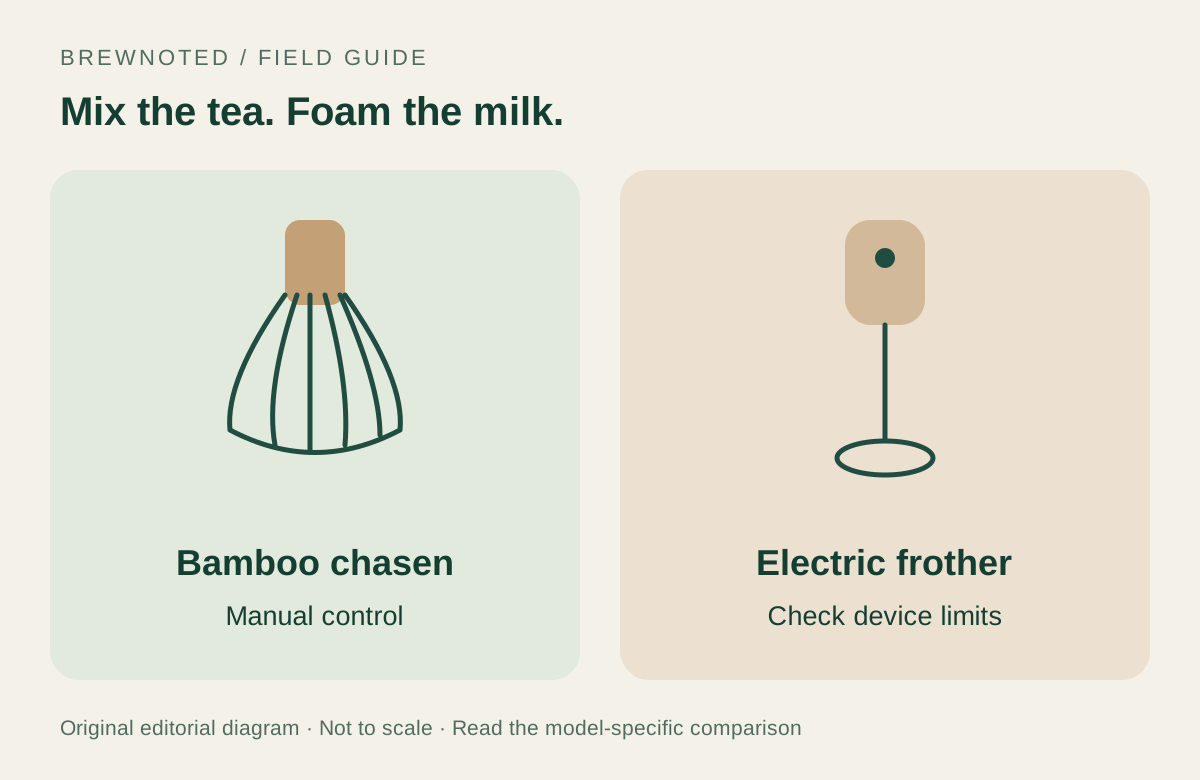
Sources checked October 21, 2026. This is a research-based comparison, not a hands-on test or taste ranking. Manufacturer facts are attributed; worked examples and decision worksheets are our editorial analysis. Illustrations are schematic, not photographs.
| Decision | Bamboo chasen | Handheld electric frother |
|---|---|---|
| Motion | Manual whisking | Motor-driven rotating head |
| Vessel check | Room for whisk movement | Depth, headroom and permitted liquid temperature |
| Power | None | Battery or charging requirement |
| Care check | Inspect bamboo tips and dry after use | Follow cleaning and motor-housing instructions |
| Latte task | Mix matcha base | May foam milk separately |
| Result to inspect | Dry pockets, texture and foam | Dry pockets, splashing and foam |
Decide whether you want to mix tea or foam milk
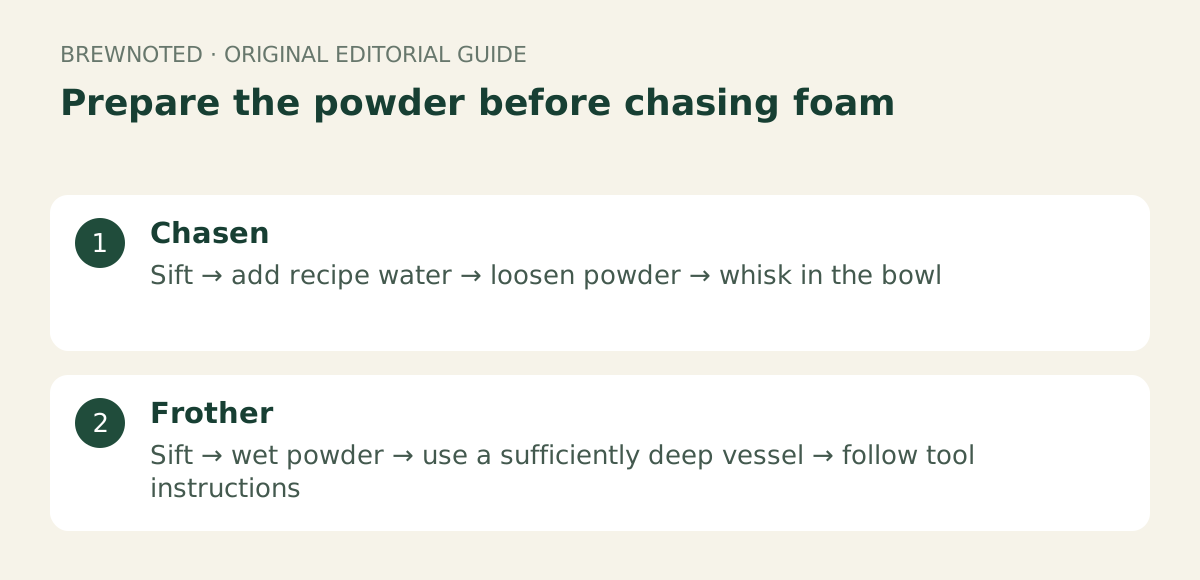
These tasks are easy to confuse in a shopping listing. Ippodo advises mixing the matcha with hot water first and foaming milk separately for a latte. A tall cap of milk foam does not demonstrate that all the powder below it was incorporated. Write down whether you make straight matcha, a hot latte or an iced milk drink. The answer changes which tool, vessel and cleaning routine are useful.
What a chasen asks from your setup
A chasen gives you direct manual control in a bowl with enough room for the tips to move. Check the utensil’s care guidance and inspect its condition before use. Do not press the delicate tips aggressively against the vessel in an attempt to crush every lump. Sifting and a measured water portion are separate preparation choices. If your only vessel is a narrow travel mug, test whether you can use the whisk comfortably before buying it.
What to verify on an electric frother
Check whether the manufacturer permits mixing the intended liquid and temperature, rather than assuming every milk frother is a matcha mixer. Look for head dimensions, speed options, cleaning instructions and how the battery or charging system works. The motor housing and whisk head may have different washing limits. Allow room for liquid movement and follow the device instructions when starting and stopping; a glass filled to the rim is an unsuitable comparison setup.
A side-by-side test that answers something
Prepare equal measured portions using the same powder, water and vessel geometry where practical. Compare mixing completeness, visible dry pockets, splash cleanup and the texture you prefer. Do not judge only the highest foam layer in a photograph. If one setup requires another bowl or a transfer step, include that task in the result. Repeat once before deciding a first attempt demonstrates the limits of a tool you have never used before.
For lattes, keep the recipe unchanged
A new frother cannot resolve a recipe that contains more milk than you enjoy. Keep powder dose, water, milk and sweetener fixed while comparing tools. Once the mixing method works, adjust drink proportions separately. For an iced latte, use a consistent ice amount and tasting interval as well. Otherwise, a warmer first glass and a more diluted second glass can make the equipment appear responsible for a recipe difference.
Compare care and replacement, not just purchase price
A bamboo tool needs appropriate cleaning and drying; an electric device adds power and model-specific parts. Check whether you can replace the head or whether a failed battery means replacing the whole item. Keep only the tools that solve a repeated task. Owning both can make sense when you whisk tea manually and foam milk separately, but two devices are not a prerequisite for enjoying matcha.
Can a spoon replace both for a first trial?
A spoon may help you combine ingredients, but it does not replicate either whisking mechanism. If it is all you have, record whether powder remains in pockets and avoid interpreting that first result as a verdict on the tea. The important shopping question is which repeated task is still difficult after measuring and sifting. Buy the tool that addresses that task rather than a larger kit chosen solely for its appearance.
Our decision guide
For a straight bowl and a preference for manual preparation, begin by investigating a chasen and a suitable bowl. For a milk-drink routine, first decide whether you need a tool for the tea base, the milk or both. If clumps are the main issue, try the sifting and mixing checklist before upgrading equipment. We have not benchmarked specific frothers and do not claim a universal texture winner.
Run a useful side-by-side mixing check
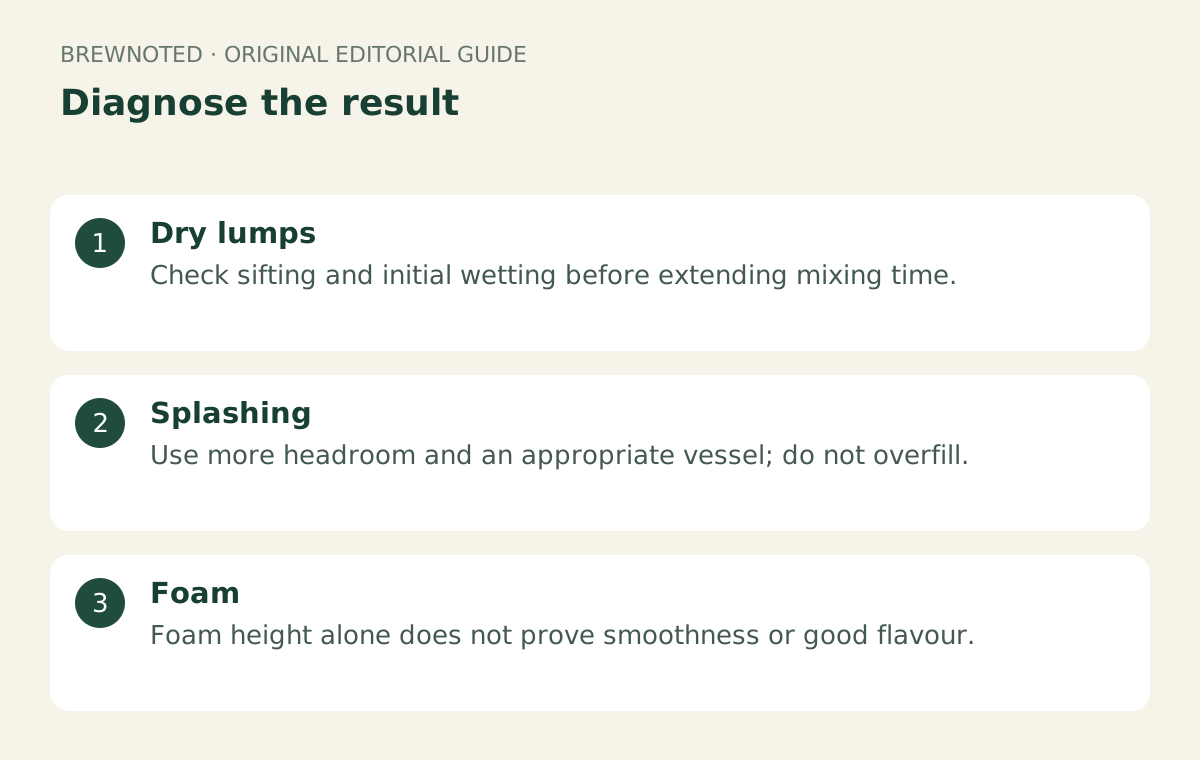
Use the same powder batch, weighed dose, water amount and temperature for both methods. Mixing in a broad bowl with one tool and a narrow glass with the other introduces a vessel difference, so record that instead of calling the result a pure tool test. Look for dry pockets, visible lumps and powder left on the walls as well as foam. For a latte, add the same milk quantity only after checking the water-and-powder mixture. Follow the electric tool's cleaning instructions and keep components that are not water-safe out of the sink. A quicker result is useful only if it also fits your cleanup routine.
Does more foam mean better mixing?
Judge the prepared base before you judge the foam. Inspect it for dry pockets and compare texture at the same recipe and elapsed time. Ippodo discusses foam as a preparation choice rather than a requirement for every matcha style. Foam height is therefore a poor standalone reason to replace a tool. A photograph can show the surface, but it cannot establish taste or the absence of powder pockets below it.
Which tool fits a daily latte routine?
Include the mixing vessel and cleanup in the decision. A whisk needs room for its movement, while an electric frother needs appropriate liquid depth and headroom according to its instructions. Record how easily you can mix the base, transfer it without leaving much behind and clean the parts afterward. If you prepare several drinks, test the actual batch quantity rather than assuming a tool that handles one portion will behave the same at three times the volume.
How we research these guides · Find your next step