BrewNoted
Loose Leaf vs Tea Bags vs Sachets: Dose, Convenience & Value
Compare tea formats using the actual leaf, grams per serving and cleanup. Bag shape alone does not establish quality or value.
Sources checked October 21, 2026. This is a research-based comparison, not a hands-on test or taste ranking. Manufacturer facts are attributed; worked examples and decision worksheets are our editorial analysis. Illustrations are schematic, not photographs.
| Decision | Loose leaf | Bags / sachets |
|---|---|---|
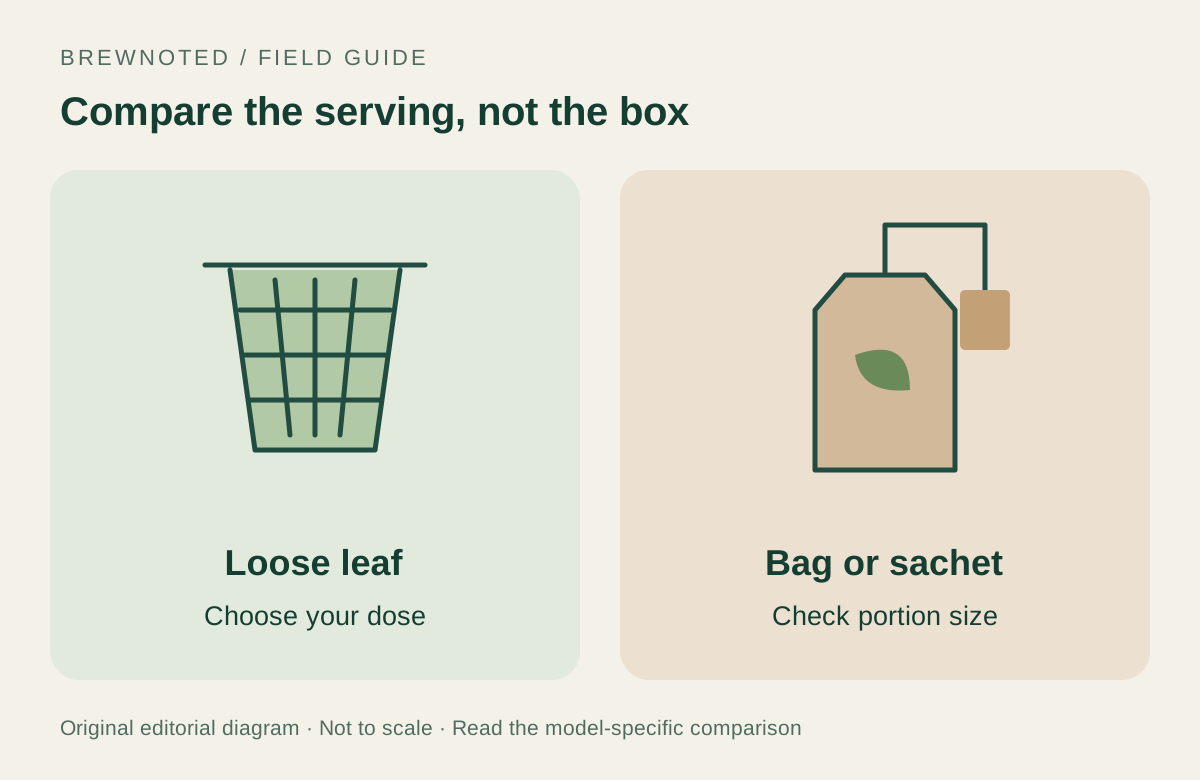
| Dose | Weigh or measure your chosen portion | Start with the supplied portion |
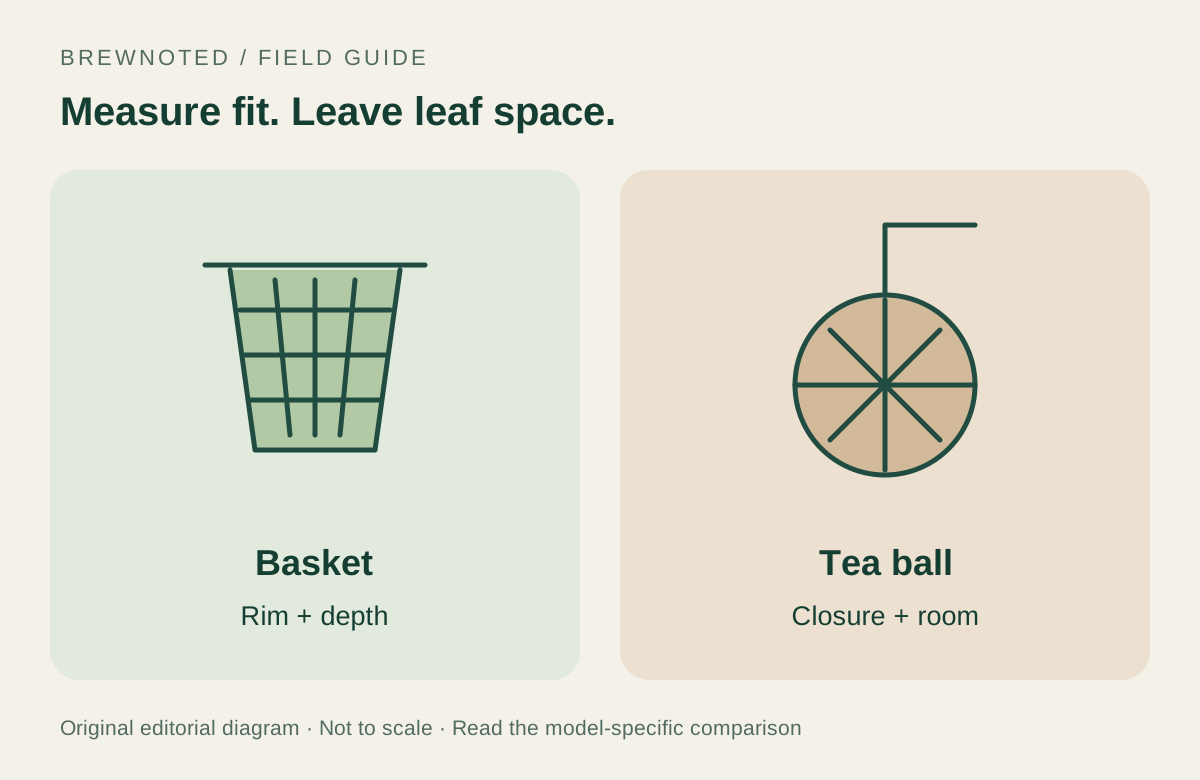
| Equipment | Suitable infuser or brewing vessel | Often just a cup and removal method |
| Adjusting serving size | Change grams with a recorded recipe | Check whether another bag is needed |
| Comparison basis | Exact tea and dry weight | Exact tea, bag weight and recommended water |
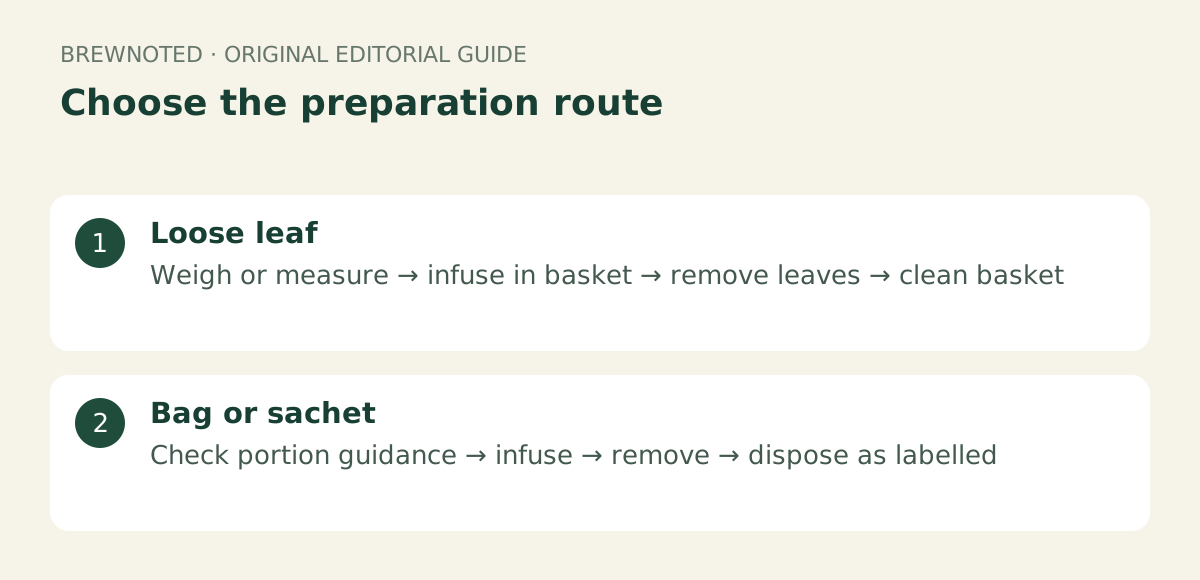
| Cleanup | Remove leaves and clean infuser | Remove used bag; follow disposal labeling |
| Quality claim | Package format alone is insufficient | Pyramid shape alone is insufficient |
Do not make format a shortcut for quality
Harney & Sons distinguishes loose leaf, sachets and conventional tea bags, and notes that its sachets contain whole-leaf tea. That is useful brand-specific information, not proof that every pyramid bag contains the same leaf or that every flat bag is inferior. Read the exact blend, ingredients and preparation details. If two packages contain different teas, their taste comparison cannot isolate the effect of packaging.
Compare grams and water before comparing prices
A tin of loose tea and a box of twenty sachets use different counting units. Check net weight, number of portions and the recommended water volume. If the sachet is intended for a smaller cup than yours, your normal recipe may use two. For loose leaf, measure what you actually use instead of assuming the scoop in a photograph is a standardized dose. These details can reverse an apparent price advantage.
A worked example with no retail-price assumptions
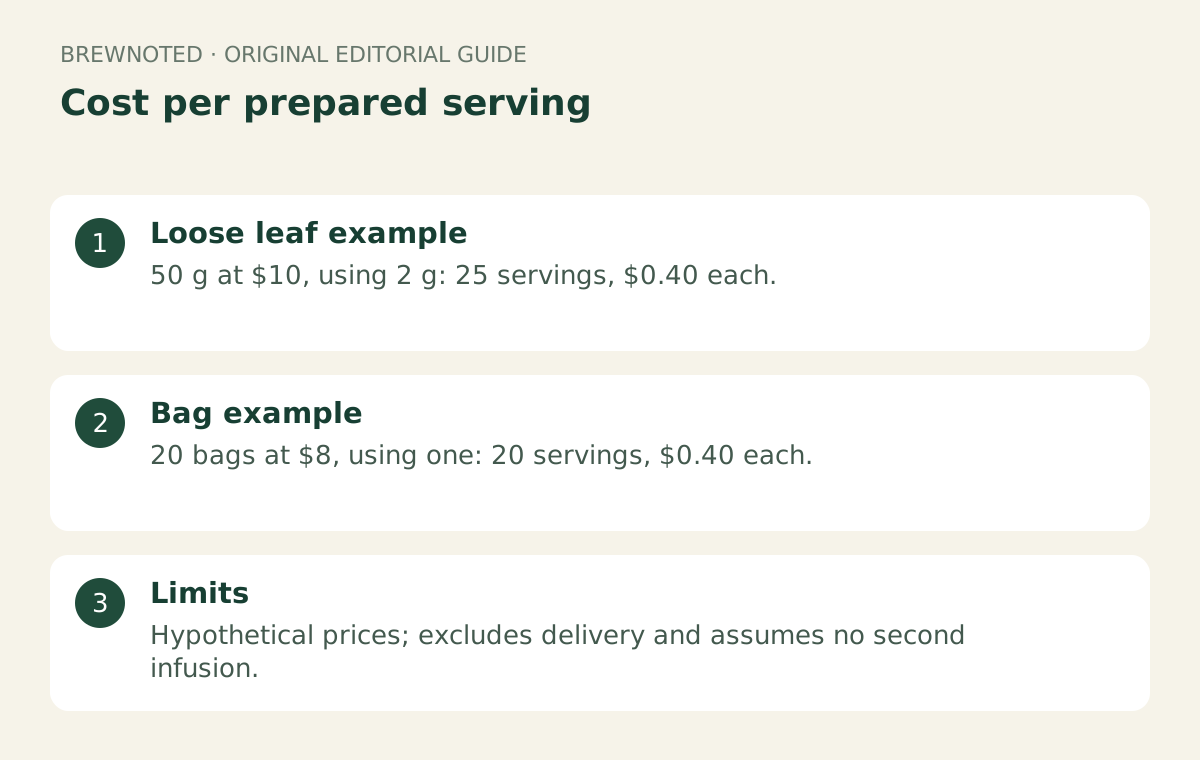
Imagine 100 g of loose tea for $15 and a personal recipe using 2.5 g per brew. It supports forty full preparations at $0.375 each before waste. Imagine twenty sachets for $10: one sachet costs $0.50, but a two-sachet mug costs $1.00. These fictional prices do not establish the cheaper format in a real shop. They show why counting containers rather than consumed servings gives an incomplete answer.
Convenience depends on the place you drink
At home, washing a basket may be a small part of a routine. At a desk without easy sink access, removing a pre-portioned bag may be much simpler. For travel, compare the complete kit: tea storage, infuser, drip tray and access to suitable water. A supposedly economical loose-leaf purchase is not economical if it stays unused because the preparation is inconvenient where you actually drink it.
Adjust strength without losing the comparison
Start with each product’s directions. If testing the same tea in two formats, keep serving volume and temperature recorded and note any known dose difference. Use a timer to separate deliberate steeping from accidentally leaving the tea in the mug. Increase or decrease one variable at a time. Do not attribute a bitter or weak result to bag shape when the water volume and steeping interval changed as well.
Materials and disposal need product-specific answers
Check the manufacturer’s current description of the bag, string, tag and wrapper. Do not infer compostability from a natural-looking color, or make a blanket health claim from the word silky. Reusable infusers also have materials and care instructions worth checking. Follow the actual packaging and local disposal guidance rather than treating all loose leaf as waste-free or all bags as identical.
Should repeat infusions count as free cups?
Count only infusions you actually prepare and enjoy. If one dose produces two acceptable servings in your routine, record both and divide the consumed tea cost accordingly. Do not assume every tea or bag will do so just to make the price look lower. Keep water volume and tasting notes for the later infusion. Otherwise, you may compare a strong first serving in one format with two very different servings in another.
Build a two-format cupboard only if you use both
A small loose-leaf supply for home and a convenient bagged tea for work can be a practical choice. Buy around those actual occasions instead of accumulating three formats of the same tea merely to conduct an elaborate comparison. Start with the smallest sensible quantity, write down your preferred dose and include the infuser cost when it is new equipment. The goal is a repeatable cup, not winning an argument about packaging.
Compare servings before claiming a saving
A package weight does not tell you how many drinks you will actually prepare. Use your intended dose and cup size for loose tea, and read the serving guidance for bags or sachets. A larger mug may need a different dose, which changes the cost comparison. If you plan a second infusion, record whether you enjoy and finish it rather than automatically counting it as another full serving. Treat compostability and disposal as packaging-specific claims: the appearance of a mesh sachet does not establish its material or your local disposal rules. Convenience, washing effort and storage also belong in the buying decision.
How we research these guides · Find your next step