BrewNoted
Tea Infuser Basket vs Ball: Mug Fit, Leaf Space & Cleaning
Choose an infuser by its dimensions, mesh and removal method. A roomy basket and a compact tea ball solve different space and handling problems.
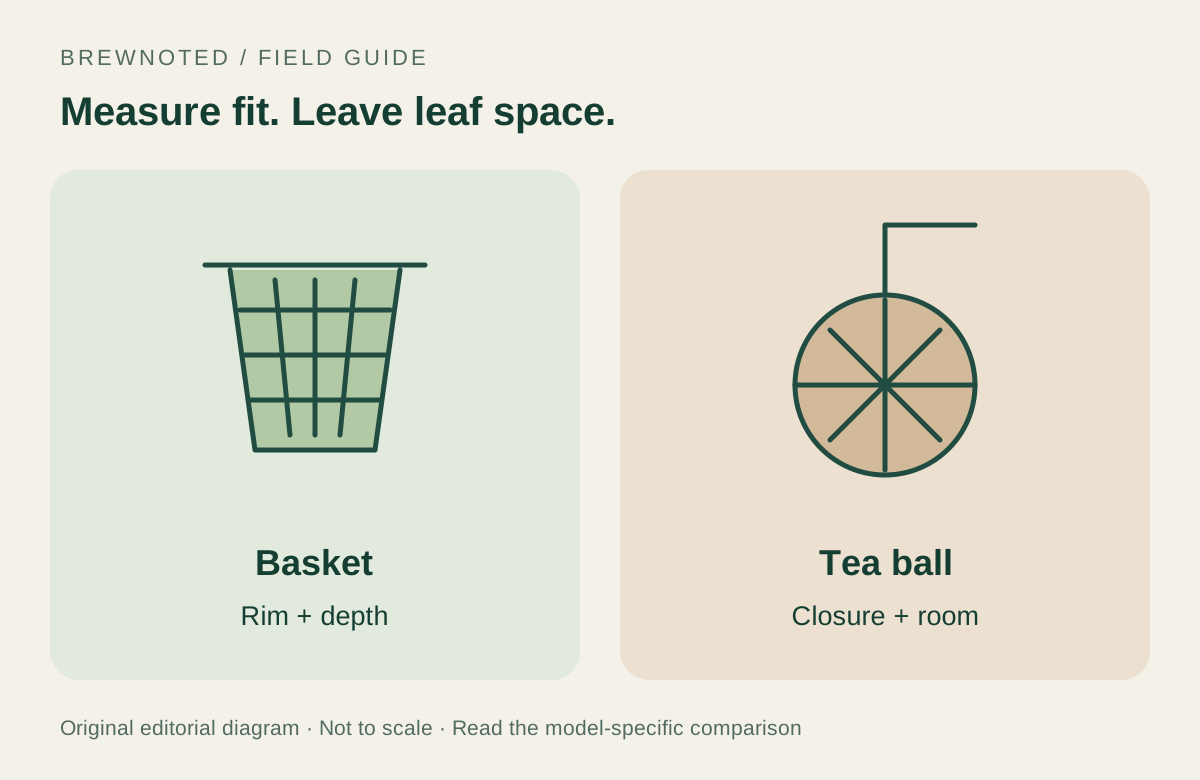
Sources checked October 21, 2026. This is a research-based comparison, not a hands-on test or taste ranking. Manufacturer facts are attributed; worked examples and decision worksheets are our editorial analysis. Illustrations are schematic, not photographs.
| Decision | Brewing basket | Tea ball |
|---|---|---|
| Mug fit | Rim support, depth and body width | Ball diameter, chain or handle reach |
| Leaf space | Inspect room after leaves expand | Inspect room inside the closed ball |
| Loading | Open top | Closure must remain clear |
| Removal | Handle / rim and drip tray | Chain / handle and a resting dish |
| Fine particles | Inspect mesh on the exact model | Inspect mesh and closure gap |
| Cleaning | Check corners and mesh frame | Check hinge, seams and clasp |
Measure three things on the mug
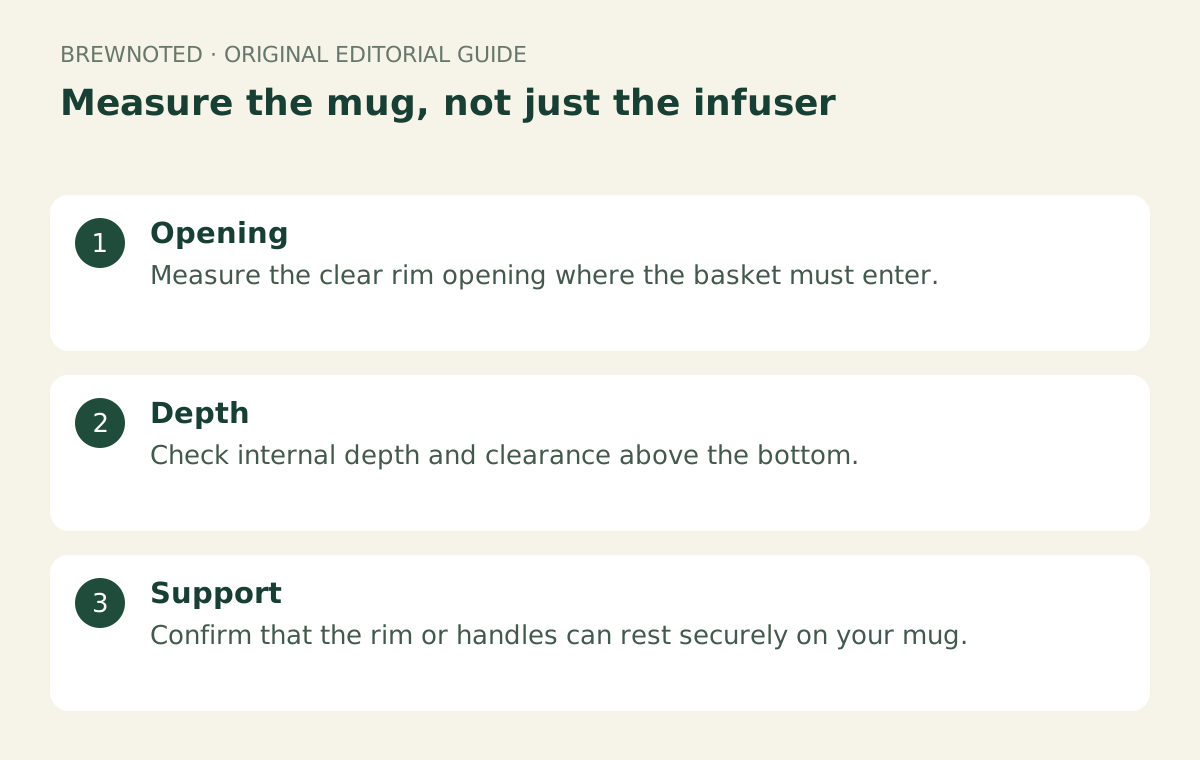
Record the opening width, internal depth and normal water level. A basket must rest securely and sit far enough into the water; a tea ball must fit without making removal awkward. Product photos often omit scale. Check the manufacturer’s dimensions instead of assuming universal compatibility. If you use a tapered mug, the narrow lower section may matter as much as the opening at the rim.
A concrete basket example shows what to look for
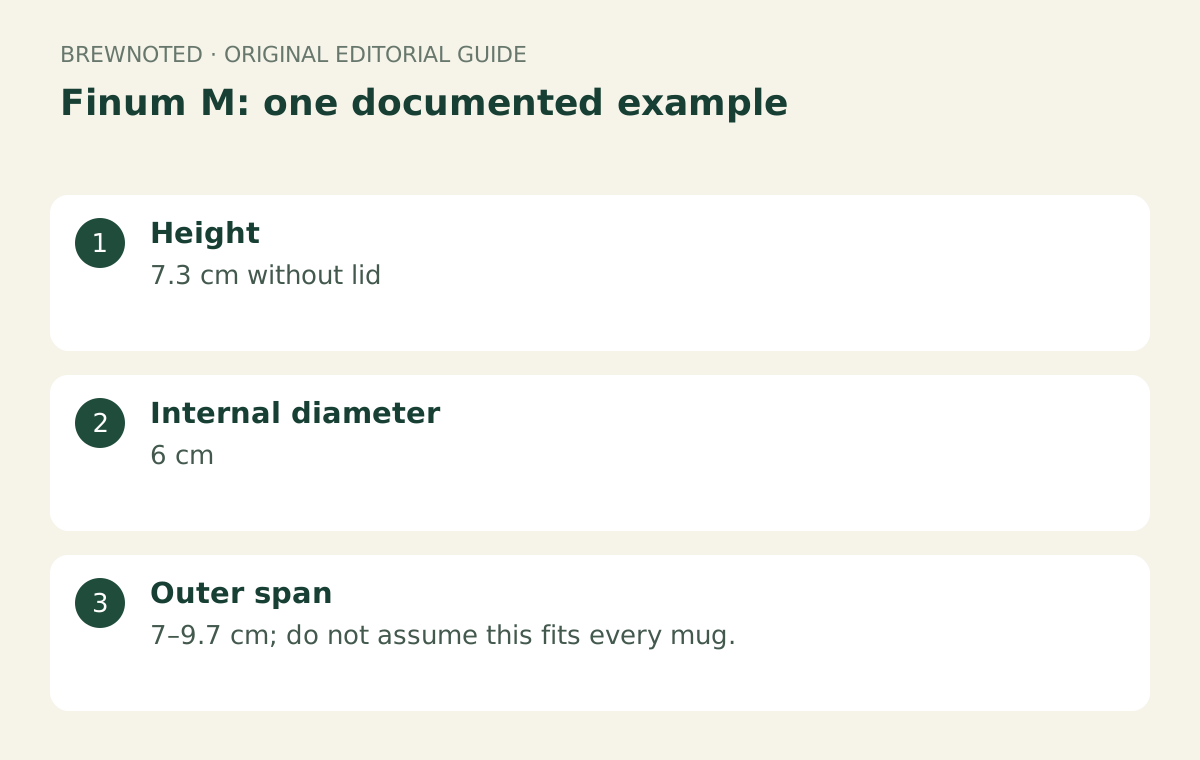
Finum lists its Brewing Basket M with a 7.3 cm height excluding the lid, a 6.0 cm internal diameter and an outer span of 7.0–9.7 cm. It specifies a plastic frame and stainless mesh, and says the lid can serve as a drip tray. These are facts about that model, not all baskets. Use the same checklist for another product: body dimensions, support span, material and where it rests after brewing.
Allow for the leaves after brewing
Inspect the used leaves in your current infuser. If they form a tightly packed mass, note the dose and available space before trying another shape. A large basket is not automatically necessary for every small serving, and a ball is not automatically too small. The useful comparison is the actual leaf type, dose and room after steeping. Avoid choosing by dry leaf volume alone when the product opens substantially in water.
Mesh and seams are separate checks
For fine particles, inspect both the mesh and the closure. A tea ball can have fine mesh but a poorly fitting seam; a basket may have a good frame but openings unsuitable for your particular tea. This guide does not promise a completely particle-free cup from an unspecified infuser. Matcha powder is also a different preparation: it is mixed into the drink, so a loose-leaf basket is not a replacement for its mixing method.
Practice the end of the brew
Decide where the dripping infuser will go before starting the timer. Check whether the handle is accessible and follow the product’s heat-handling instructions. A chain that slips into a tall mug or a basket with nowhere to rest can make an otherwise good brew inconvenient. At work, a small resting dish may improve the routine more than buying another tea. Include the removal step when comparing convenience.
Cleaning is where small construction details matter
After the leaves are removed, look for residue in hinges, seams, corners and where mesh meets its frame. Follow the exact maker’s cleaning instructions rather than assuming every infuser is dishwasher-safe. Let the parts dry as directed. If a closure is damaged, do not compensate by overfilling or forcing it shut. Replacement availability and ease of inspection are worth considering when a device will be used every day.
Will a basket work in a travel tumbler?
Measure the opening, inner taper and water level first. A basket that rests on the rim may prevent a lid from closing; a hanging ball can also interfere with a lid or drinking opening. Remove the infuser before closing or moving the vessel unless the manufacturer specifically designed the combination for that use. Choose a stable preparation setup rather than assuming a normal mug accessory is compatible with a sealed travel container.
Compare the same tea before replacing the cupboard
Use the same tea, measured dose, water volume and steeping conditions when comparing two suitable infusers. Record ease of loading, removal, sediment and cleanup separately from taste. If the basket uses more tea because you filled it by eye, the comparison no longer isolates the infuser. Start with one mug and one normal recipe; a collection of attractive infusers will not resolve an unmeasured routine.
Check fit with a simple paper measurement
Measure the opening and internal depth of your mug rather than its advertised drink capacity. A narrow neck, thick rim or tapered wall can prevent a basket from seating even when the mug holds plenty of water. Compare the manufacturer's dimensions with the exact part of the basket that enters the mug and the parts that support it. For a tea ball, check that the closure stays secure and that the chain can be retrieved without putting fingers into hot water. Leave space for the particular leaves to expand; there is no universal capacity advantage that can be inferred from the word basket alone.
How we research these guides · Find your next step